

The copper-peptide and melanocortin chemistry behind our skin remodeling research line.
Aesthetic and dermatological research in this category centers on two distinct mechanisms: copper-peptide-driven extracellular matrix remodeling (GHK-Cu) and melanocortin receptor signaling that regulates melanogenesis (the Melanotan compounds). Both pathways are extensively documented in the peer-reviewed literature, though the depth and quality of human clinical evidence varies considerably by compound — GHK-Cu has a large cosmetic-safety literature, while Melanotan 2 has real documented case reports of adverse effects from unsupervised self-administration that any researcher should be aware of.
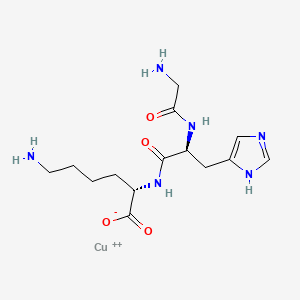
GHK-Cu is a naturally occurring copper-binding tripeptide whose plasma concentration declines with age. In dermal fibroblast and keratinocyte research, it stimulates collagen and glycosaminoglycan synthesis, promotes angiogenesis, and has chemotactic effects on immune cells, and it has been shown to influence broad gene-expression programs linked to tissue remodeling and wound repair.
Explore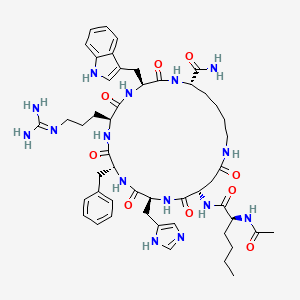
Melanotan 2 is a synthetic, cyclic, non-selective analogue of alpha-MSH that activates multiple melanocortin receptors: MC1R (driving melanogenesis, its intended research use) and MC3R/MC4R (implicated in off-target appetite and sexual-function effects observed in early pharmacology studies). Its lack of receptor selectivity relative to afamelanotide is understood to be why it was never advanced as an approved drug.
ExploreSexual Medicine · 2021
Documents acute ischemic priapism after self-administered subcutaneous Melanotan 2 injection, requiring surgical decompression after failed aspiration.
View Source →BioMed Research International · 2015
Reviews GHK's roles stimulating collagen synthesis, attracting immune cells, and regulating genes relevant to skin regeneration.
View Source →Annals of Internal Medicine · 2013
Case report linking Melanotan injection to posterior reversible encephalopathy syndrome (PRES), a serious acute neurological syndrome.
View Source →Clinical Toxicology · 2013
Reports a Melanotan 2 overdose presenting with priapism and rhabdomyolysis.
View Source →Journal of Peptide Science · 2012
Cultured skin model study showing copper-free GHK increases basal stem-cell proliferative markers and integrin expression.
View Source →Journal of Biomaterials Science, Polymer Edition · 2008
Foundational review describing GHK-Cu's activation of fibroblast/keratinocyte proliferation, angiogenesis, and nerve outgrowth relevant to tissue remodeling.
View Source →Archives of Facial Plastic Surgery · 2006
Randomized trial found no objective reduction in erythema or wrinkling from topical copper tripeptide after laser resurfacing, versus control, despite higher patient-reported satisfaction — real evidence does not uniformly support efficacy claims.
View Source →Life Sciences · 1996
Original Phase I dose-escalation study in 3 male volunteers documented tanning activity along with nausea, somnolence, fatigue, a stretching/yawning complex, and prolonged spontaneous erections.
View Source →