
The growth hormone axis and mitochondrial-metabolism research behind our physical performance line.
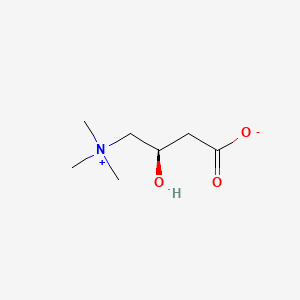
This category's compounds converge on two axes: growth hormone secretagogue/releasing-hormone signaling (Ipamorelin, Sermorelin, IGF-1 LR3) and mitochondrial/metabolic pathways (L-Carnitine, SLU-PP-332). Ipamorelin and Sermorelin both engage the GH axis but through different receptors (ghrelin receptor vs. GHRH receptor), each studied for a more selective secretagogue profile than older-generation compounds. L-Carnitine and SLU-PP-332 instead target fatty-acid oxidation and mitochondrial biogenesis directly.
IGF-1 LR3 is a modified analogue of insulin-like growth factor-1, engineered with a Glu3→Arg substitution and a 13-residue N-terminal extension that markedly reduces binding to IGF-binding proteins and extends bioavailability relative to native IGF-1. It binds and activates the IGF-1 receptor, triggering downstream PI3K/Akt and MAPK/ERK signaling studied in relation to cellular proliferation, protein synthesis, and anabolic tissue signaling.
Explore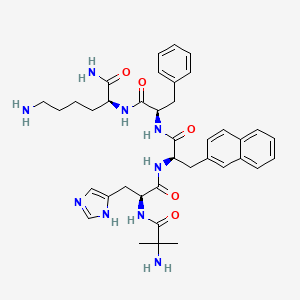
Ipamorelin is a selective agonist of the growth hormone secretagogue receptor (GHSR-1a), derived from GHRP-1. The original characterization study found it stimulates pulsatile growth hormone release at potency comparable to other GH secretagogues, but — unlike earlier-generation compounds in its class — without significantly elevating ACTH, cortisol, or prolactin above GHRH-stimulated levels, even at supra-effective doses.
ExploreCirculation · 2024
SLU-PP-332 and a related analogue improved ejection fraction, reduced fibrosis, and increased survival in a mouse pressure-overload heart failure model.
View Source →ACS Chemical Biology · 2023
The original characterization paper: SLU-PP-332 increased mitochondrial respiration in skeletal muscle cells and increased oxidative muscle fiber content and exercise endurance in mice via an ERRα-dependent gene program.
View Source →Journal of Developmental Origins of Health and Disease · 2023
Acute IGF-1 LR3 infusion into late-gestation fetal sheep suppressed glucose-stimulated insulin secretion in vivo, but isolated islets from treated animals retained normal secretory capacity, indicating a transient extrinsic effect rather than lasting beta-cell damage.
View Source →International Journal of Molecular Sciences · 2022
Using IGF-1 LR3 as the receptor-activating ligand, glycosylation-deficient cells showed reduced surface IGF-1R and blunted ERK1/2 phosphorylation, identifying N-linked glycosylation as required for normal IGF-1R/ERK signaling.
View Source →Endocrinology · 2020
Reviews CPT1A as the rate-limiting hepatic enzyme converting acyl-CoA to acyl-carnitine for mitochondrial fatty-acid oxidation entry, and its genetic/nutritional regulation.
View Source →Biochimica et Biophysica Acta · 2016
Details how carnitine transfers long-chain fatty acids across the inner mitochondrial membrane for beta-oxidation, and how OCTN2 transporter defects cause primary carnitine deficiency.
View Source →Current Drug Metabolism · 2011
Reviews L-carnitine's role transporting fatty-acid chains into the mitochondrial matrix, noting promising but still limited evidence for applications in heart failure and weight management.
View Source →Journal of Pharmacology and Experimental Therapeutics · 2009
Repeated ipamorelin dosing significantly increased fecal output, food intake, and weight gain in a rat postoperative ileus model, and a single dose reduced time to first bowel movement.
View Source →Neuro Endocrinology Letters · 2004
Ex vivo pancreatic fragments from normal and diabetic rats showed increased insulin secretion on ipamorelin exposure, blocked by calcium-channel and adrenergic-receptor antagonists.
View Source →European Journal of Endocrinology · 1998
The original characterization study: ipamorelin stimulated GH release with potency similar to GHRP-6, but unlike other secretagogues did not elevate ACTH or cortisol above GHRH-stimulated levels even at supra-effective doses.
View Source →Hormone Research · 1988
Evaluated chronic subcutaneous GHRH(1-29) dosing as a growth-promoting intervention in children with short stature.
View Source →European Journal of Pediatrics · 1986
In 131 children and adolescents, GRF(1-29)NH2 stimulation testing combined with basal IGF-1 measurement reliably distinguished GH-deficient from non-deficient children.
View Source →