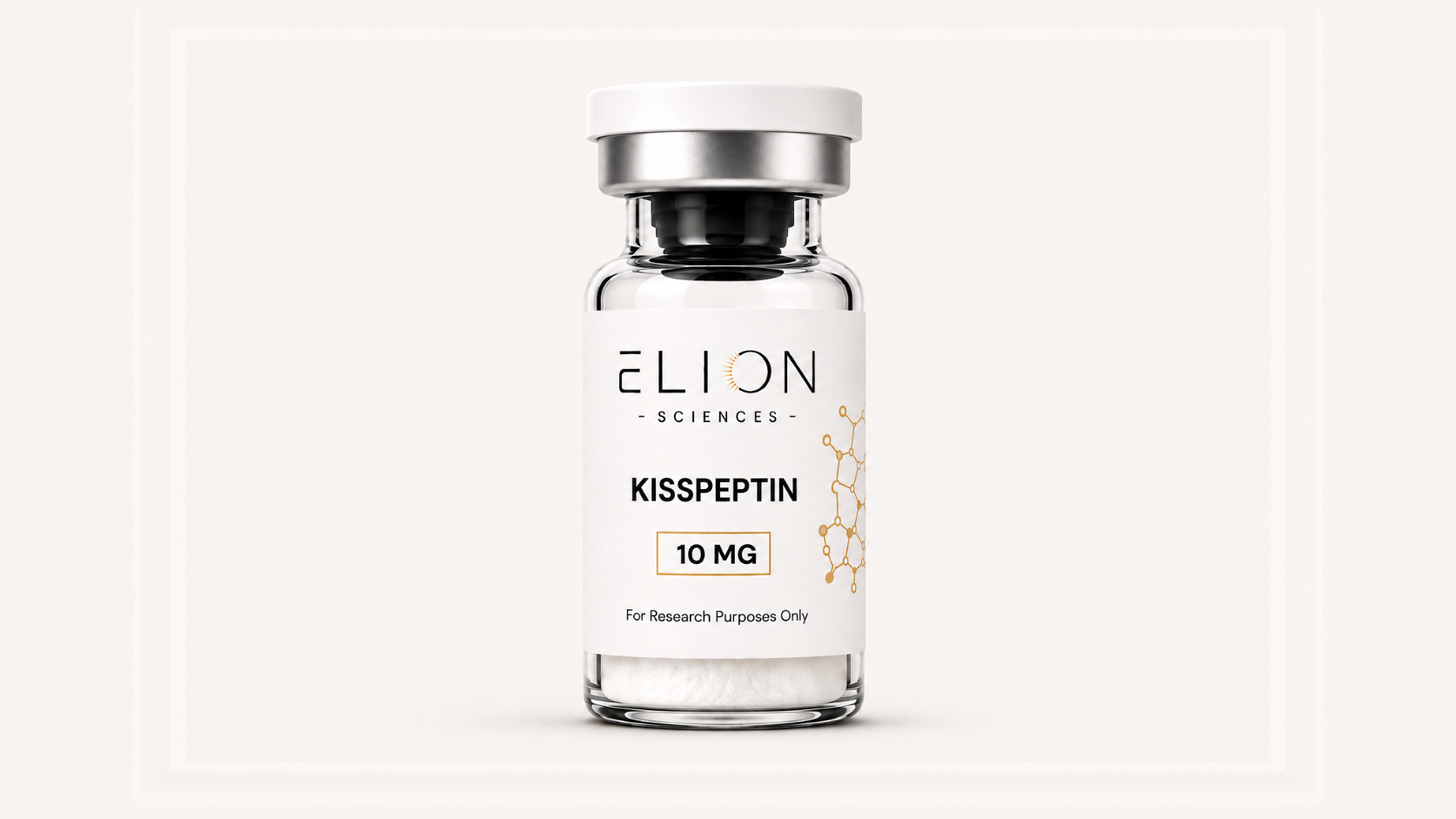

Kisspeptin binds the KISS1 receptor (KISS1R/GPR54) on hypothalamic GnRH neurons, triggering phospholipase C activation, closure of potassium channels, and sustained depolarization — positioning it as ...
Kisspeptin binds the KISS1 receptor (KISS1R/GPR54) on hypothalamic GnRH neurons, triggering phospholipase C activation, closure of potassium channels, and sustained depolarization — positioning it as the principal upstream regulator of pulsatile and surge GnRH release, and consequently of downstream LH/FSH secretion. A nonneuronal KISS1R pathway in astrocytes has also been identified that modulates the reproductive axis indirectly.
Journal of Clinical Endocrinology & Metabolism · 2025
Randomized, placebo-controlled IV infusion study in 95 healthy participants found kisspeptin robustly raised serum LH but produced no significant change in anxiety, cortisol, blood pressure, or heart rate versus placebo.
View Source →Journal of Clinical Investigation · 2024
Mouse study identifying a nonneuronal KISS1R pathway in astrocytes; conditional astrocytic knockout altered LH pulsatility, pubertal timing, and estrous cyclicity.
View Source →Frontiers in Endocrinology · 2022
Reviews KNDy neuron biology and kisspeptin's roles in puberty onset and gonadal feedback in both sexes.
View Source →