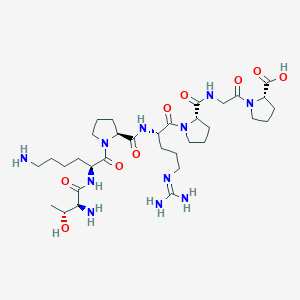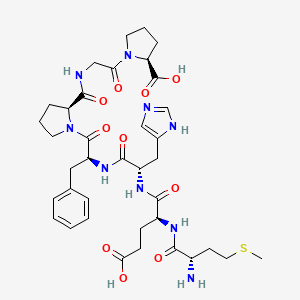

The neurotrophic and neuroendocrine signaling pathways behind our focus and cognitive health research line.
This research area spans several distinct mechanisms: melanocortin receptor signaling in neuroendocrine and sexual-function pathways (Kisspeptin, PT-141), proposed neurotrophic/GABAergic modulation in cognition and stress research (Selank, Semax), and sleep-related neural signaling with a genuinely unresolved mechanism (DSIP). The evidence base varies widely by compound — from PT-141's unusually deep FDA-approved clinical trial record to DSIP's decades-long, still-unsettled search for a defined receptor.
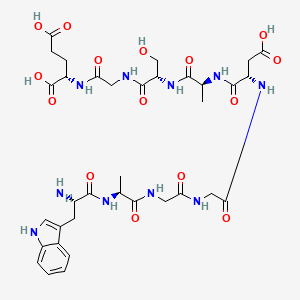
DSIP is a nonapeptide originally isolated from rabbit brain and studied for its association with delta (slow-wave) sleep EEG activity across several species. Despite decades of research, no dedicated DSIP receptor or definitive downstream signaling cascade has been characterized, and its relationship to endogenous sleep regulation remains genuinely unresolved in the primary literature — this uncertainty is itself a notable and honestly-reported finding, not a gap in this summary.
Explore
Kisspeptin binds the KISS1 receptor (KISS1R/GPR54) on hypothalamic GnRH neurons, triggering phospholipase C activation, closure of potassium channels, and sustained depolarization — positioning it as the principal upstream regulator of pulsatile and surge GnRH release, and consequently of downstream LH/FSH secretion. A nonneuronal KISS1R pathway in astrocytes has also been identified that modulates the reproductive axis indirectly.
ExploreJournal of Clinical Endocrinology & Metabolism · 2025
Randomized, placebo-controlled IV infusion study in 95 healthy participants found kisspeptin robustly raised serum LH but produced no significant change in anxiety, cortisol, blood pressure, or heart rate versus placebo.
View Source →Journal of Clinical Investigation · 2024
Mouse study identifying a nonneuronal KISS1R pathway in astrocytes; conditional astrocytic knockout altered LH pulsatility, pubertal timing, and estrous cyclicity.
View Source →Bulletin of Experimental Biology and Medicine · 2022
Selank reduced a composite morphine-withdrawal severity index by roughly 40% and increased pain threshold about 9-fold versus untreated withdrawal controls in rats.
View Source →Frontiers in Endocrinology · 2022
Reviews KNDy neuron biology and kisspeptin's roles in puberty onset and gonadal feedback in both sexes.
View Source →International Journal of Molecular Sciences · 2021
Following transient cerebral artery occlusion, Semax upregulated active CREB in subcortical structures and downregulated inflammatory/damage markers (MMP-9, c-Fos, active JNK) in cortical tissue.
View Source →Doklady Biological Sciences · 2020
Resting-state fMRI study in 52 healthy volunteers randomized to Selank, Semax, or placebo found treatment-specific changes in functional connectivity between the amygdala and temporal/parahippocampal regions.
View Source →Bulletin of Experimental Biology and Medicine · 2019
Selank prevented memory disturbances associated with chronic ethanol exposure and withdrawal in aging rats, an effect linked to regulation of hippocampal and prefrontal BDNF levels.
View Source →Behavioural Neurology · 2017
In elevated-plus-maze testing, Selank's anxiolytic effect was comparable to diazepam alone, with combined treatment most effective under chronic stress.
View Source →BMC Genomics · 2014
Genome-wide transcriptomic analysis after permanent cerebral artery occlusion found Semax predominantly upregulated immune-response genes along with vascular-related gene changes.
View Source →Journal of Neurochemistry · 2006
Concludes that decades after its isolation, no DSIP receptor or clear mechanistic link to sleep regulation has been established, and structural analogues rather than DSIP itself produced slow-wave-sleep effects in animal models.
View Source →International Journal of Clinical Pharmacology Research · 1987
Double-blind, placebo-controlled crossover study of IV DSIP in chronic insomniacs found reductions in nocturnal awakenings and NREM sleep latency, but concluded the improvements lacked clear clinical significance versus placebo.
View Source →