

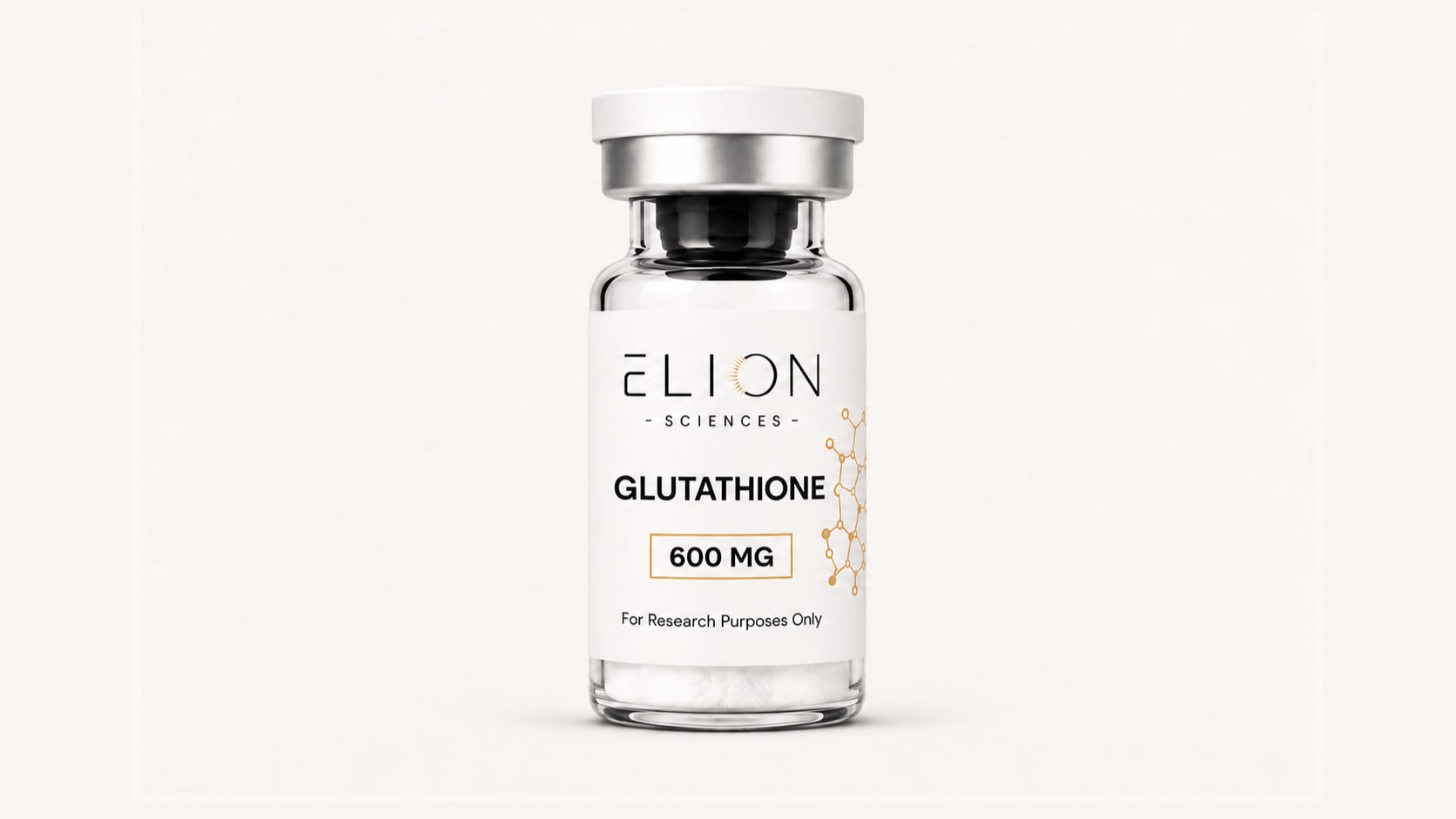
Often referred to as the body's 'master antioxidant.' It is heavily researched for its capacity to neutralize free radicals, clear cellular toxicity, and support liver function in oxidative stress models.
Buy One, Get One FREE! The lowest-priced item in each pair is on us. Get up to 5 FREE items per order! Offer valid until November 30, 2026
C10H17N3O6S · 307.33 g/mol · Glutathione peroxidase, Glutathione-S-transferases · Not FDA-approved
Batch 6409312
You might also want to check out these products.
Formula C10H17N3O6S · 307.33 g/mol · Not FDA-Approved — Research Use Only
Glutathione is the most abundant intracellular low-molecular-weight thiol and the major cellular redox buffer, serving as the essential cofactor for glutathione peroxidase (neutralizing peroxides) and glutathione-S-transferases (hepatic xenobiotic conjugation and clearance). A randomized, placebo-controlled trial of IV glutathione in Parkinson's disease found it well tolerated with no significant difference in adverse events from placebo, but no statistically significant motor-symptom benefit. IV glutathione used off-label for skin lightening has documented adverse effects sufficient to prompt a public regulatory warning against that specific use.
Indian Journal of Dermatology, Venereology and Leprology · 2016
Concludes there is no solid evidence for IV glutathione's skin-lightening efficacy, and notes a public regulatory warning was issued against its off-label use for this purpose due to adverse effects.
View Source →Movement Disorders · 2009
IV glutathione was well tolerated versus placebo with no significant difference in adverse events, but showed no statistically significant motor-symptom benefit.
View Source →Journal of Nutrition · 2004
Reviews glutathione synthesis regulation and its roles in antioxidant defense and detoxification, linking deficiency to oxidative stress in numerous disease states.
View Source →

