
CJC-1295 without DAC, also called Modified GRF (1-29), is a 29-amino-acid analog of growth hormone-releasing hormone (GHRH) with four substitutions from native GRF(1-29): D-Ala2, Gln8, Ala15 and Leu27...
CJC-1295 without DAC, also called Modified GRF (1-29), is a 29-amino-acid analog of growth hormone-releasing hormone (GHRH) with four substitutions from native GRF(1-29): D-Ala2, Gln8, Ala15 and Leu27. It binds the GHRH receptor on pituitary somatotroph cells and stimulates growth hormone release. It lacks the drug affinity complex (DAC), the maleimido-lysine group that lets CJC-1295 with DAC bind serum albumin, so it does not have the 6 to 8 day half-life reported for the DAC form. The human studies listed below used the DAC form.
Buy One, Get One FREE! The lowest-priced item in each pair is on us. Get up to 5 FREE items per order! Offer valid until November 30, 2026
J Clin Endocrinol Metab · 2006
In healthy men, one injection of CJC-1295 (DAC form) raised trough GH 7.5-fold, mean GH 46% and IGF-I 45%. The frequency and size of GH pulses did not change.
View Source →J Clin Endocrinol Metab · 2006
In two randomized, placebo-controlled trials in healthy adults, a single injection of CJC-1295 (DAC form) raised mean plasma GH 2- to 10-fold for 6 days or more and IGF-I 1.5- to 3-fold for 9 to 11 days. The estimated half-life was 5.8 to 8.1 days.
View Source →Endocrinology · 2005
In rats, CJC-1295, a tetrasubstituted form of hGRF(1-29) with a maleimido-lysine added to bind serum albumin, gave a 4-fold larger GH response over 2 hours than hGRF(1-29) and stayed in plasma beyond 72 hours.
View Source →
Orthopedic Surgeon and Founder, Human 2.0
Chris Raynor is an Ottawa orthopedic surgeon and founder of Human 2.0. He discusses peptide evidence, injury recovery and product-quality risks through videos and The Ortho-POD.
View Dr. Chris Raynor, MD, FRCSC
Physician and Founder, Manus Solis
Handsun Xiao is a Toronto physician at Manus Solis. He writes about peptide therapy, metabolic health, hormone care and the evidence behind longevity interventions.
View Dr. Handsun Xiao, MD, CCFP
IGF-1 LR3 is a modified analogue of insulin-like growth factor-1, engineered with a Glu3→Arg substitution and a 13-residue N-terminal extension that markedly reduces binding to IGF-binding proteins and extends bioavailability relative to native IGF-1. It binds and activates the IGF-1 receptor, triggering downstream PI3K/Akt and MAPK/ERK signaling studied in relation to cellular proliferation, protein synthesis, and anabolic tissue signaling.
Explore IGF-1 LR3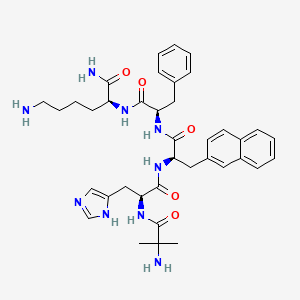
Ipamorelin is a selective agonist of the growth hormone secretagogue receptor (GHSR-1a), derived from GHRP-1. The original characterization study found it stimulates pulsatile growth hormone release at potency comparable to other GH secretagogues, but — unlike earlier-generation compounds in its class — without significantly elevating ACTH, cortisol, or prolactin above GHRH-stimulated levels, even at supra-effective doses.
Explore Ipamorelin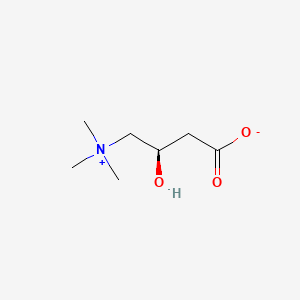
L-Carnitine is required to shuttle long-chain fatty acids across the inner mitochondrial membrane via the CPT1/carnitine-acylcarnitine-translocase/CPT2 system, the rate-limiting entry point for mitochondrial beta-oxidation. Genetic OCTN2 transporter defects that impair carnitine uptake cause primary carnitine deficiency, underscoring the pathway's centrality to fatty-acid-based cellular energy metabolism.
Explore L-Carnitine
Sermorelin corresponds to the biologically active N-terminal 1-29 fragment of human growth hormone-releasing hormone (GHRH). It binds the pituitary GHRH receptor, activating Gs/adenylate cyclase/cAMP signaling that drives pulsatile growth hormone release, and has historically been used both as a diagnostic probe of pituitary GH reserve and as a chronic-dosing research tool for the GHRH axis.
Explore Sermorelin
SLU-PP-332 is a synthetic pan-agonist of the estrogen-related receptor subfamily (ERR-alpha, ERR-beta, ERR-gamma), most potent at ERR-alpha. Activation of these nuclear receptors induces transcriptional programs governing mitochondrial biogenesis, oxidative muscle fiber type, and fatty-acid utilization, and it has been studied as a pharmacological "exercise mimetic" tool for aerobic-metabolism research, including a cardioprotective effect in a mouse heart-failure model.
Explore SLU-PP-332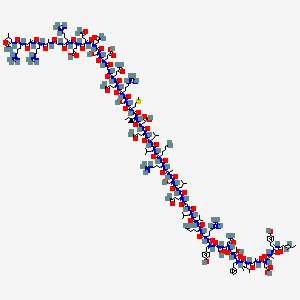
Tesamorelin is the full 44-amino-acid sequence of human growth hormone-releasing hormone with an N-terminal hexenoyl modification that confers resistance to DPP-IV-mediated degradation, extending its half-life relative to native GHRH. It binds the pituitary GHRH receptor to stimulate endogenous GH/IGF-1 axis activity, and has been studied specifically, and successfully in pivotal human trials, for reducing visceral adipose tissue.
Explore Tesamorelin