
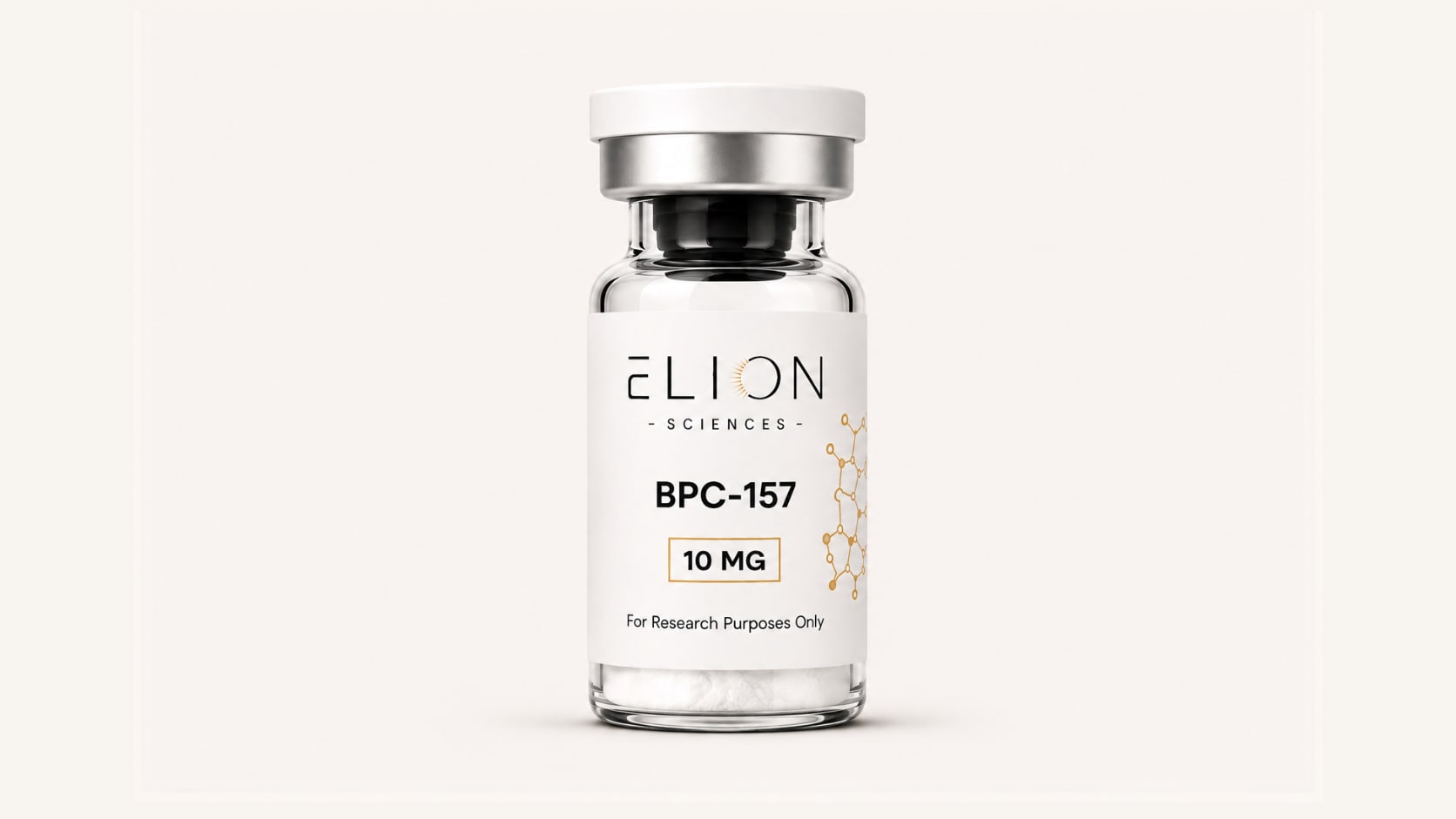
Synthetically derived from a protein naturally found in gastric juice. In scientific literature, it is widely studied for its remarkable role in accelerating tissue repair, angiogenesis, and gut healing. Provided at ≥99% purity for rigorous in-vitro and laboratory research into cellular recovery mechanisms.
Buy One, Get One FREE! The lowest-priced item in each pair is on us. Get up to 5 FREE items per order! Offer valid until November 30, 2026
C62H98N16O22 · 1419.5 g/mol · Proposed VEGFR2 signaling, FAK-paxillin pathway (fibroblast migration) · Not FDA-approved
Batch 2610728
Customers often pair this with:



You might also want to check out these products.
Actin-Regulating Repair Peptide
Copper-Binding Tripeptide

IGF-1 Receptor & Cellular Growth

ERR & Mitochondrial Metabolism
Formula C62H98N16O22 · 1419.5 g/mol · Not FDA-Approved — Research Use Only
BPC-157 is a synthetic partial sequence derived from a peptide identified in human gastric juice. Preclinically, it accelerates healing of tendon, ligament, muscle, and gut tissue by promoting fibroblast and tenocyte migration, cell survival under oxidative stress, and new blood vessel formation. A 2025 systematic review screened 544 articles and found only 36 met inclusion criteria — 35 preclinical (animal) studies and exactly one small retrospective clinical case series. Published clinical safety data for BPC-157 remains absent; the evidence base is overwhelmingly animal and in-vitro.
HSS Journal · 2025
Reviewed 36 total studies (35 preclinical, 1 clinical) from 1993-2024; preclinical evidence supports musculoskeletal healing effects, but concluded clinical safety data are absent and no FDA approval exists.
View Source →Biomedicines · 2021
In a rat myotendinous junction injury model, BPC-157 produced marked functional recovery and prevented muscle atrophy versus untreated controls.
View Source →Journal of Applied Physiology · 2011
In rat tendon explant/fibroblast culture, BPC-157 accelerated tendon outgrowth, increased fibroblast survival under oxidative stress, and increased migration via FAK-paxillin pathway activation.
View Source →Surgery Today · 2007
In rats, intraperitoneal BPC-157 improved anastomotic wound healing across macroscopic, histological, and biomechanical measures versus saline.
View Source →