

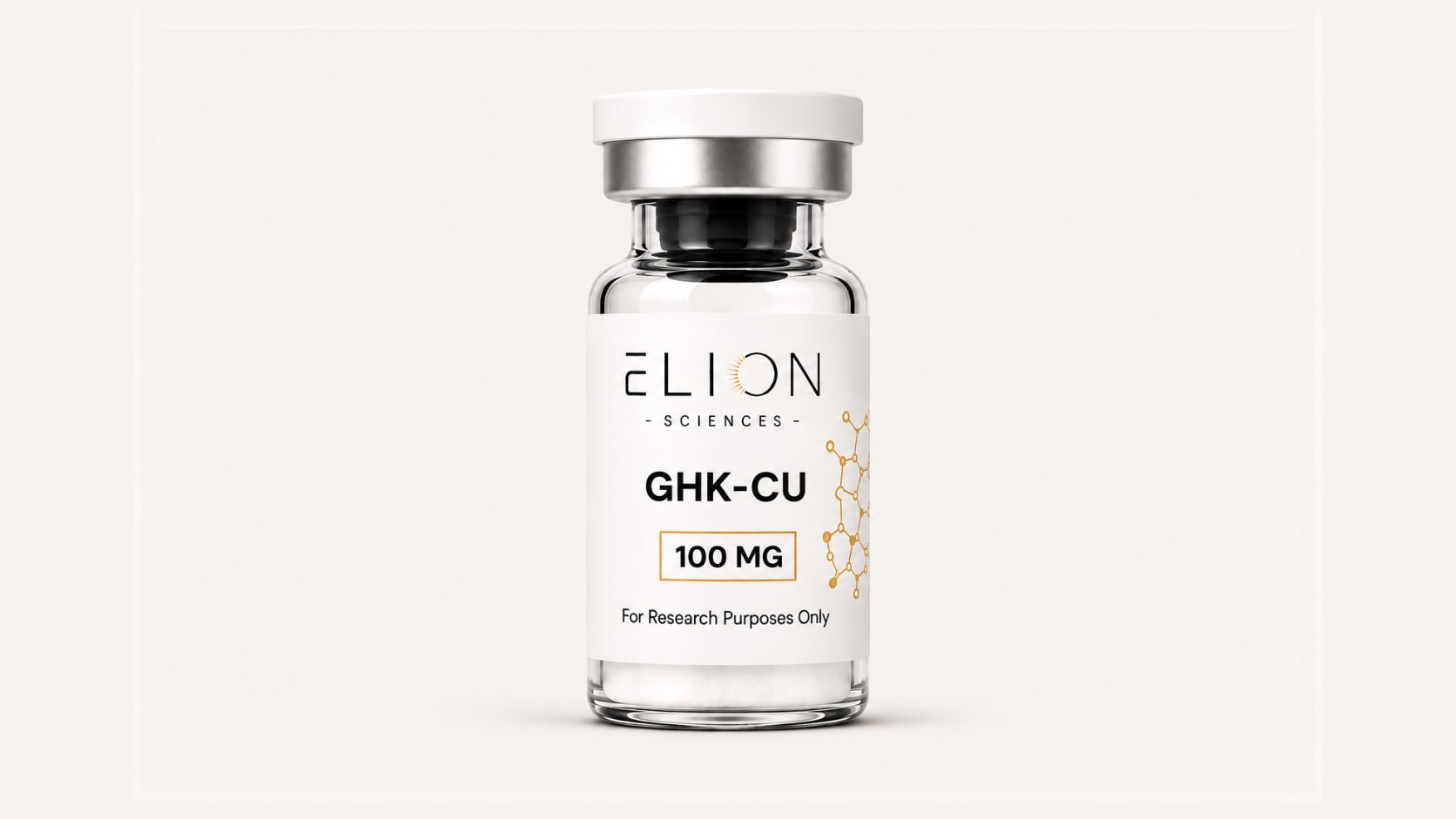
A naturally occurring copper complex and a staple in regenerative research. It is heavily documented in the literature for its ability to stimulate blood vessel growth, nerve outgrowth, and collagen production in tissue remodeling studies.
Buy One, Get One FREE! The lowest-priced item in each pair is on us. Get up to 5 FREE items per order! Offer valid until November 30, 2026
C14H23CuN6O4+ · 402.92 g/mol · Copper(II) chelation, Fibroblast/keratinocyte gene expression programs · Not FDA-approved
Batch 2609228
Customers often pair this with:


You might also want to check out these products.
Actin-Regulating Repair Peptide
Systemic Tissue Repair Peptide

IGF-1 Receptor & Cellular Growth

ERR & Mitochondrial Metabolism
Formula C14H23CuN6O4+ · 402.92 g/mol · Not FDA-Approved — Research Use Only
GHK-Cu is a naturally occurring copper-binding tripeptide whose plasma concentration declines with age. In dermal fibroblast and keratinocyte research, it stimulates collagen and glycosaminoglycan synthesis, promotes angiogenesis, and has chemotactic effects on immune cells, and it has been shown to influence broad gene-expression programs linked to tissue remodeling and wound repair.
BioMed Research International · 2015
Reviews GHK's roles stimulating collagen synthesis, attracting immune cells, and regulating genes relevant to skin regeneration.
View Source →Journal of Peptide Science · 2012
Cultured skin model study showing copper-free GHK increases basal stem-cell proliferative markers and integrin expression.
View Source →Journal of Biomaterials Science, Polymer Edition · 2008
Foundational review describing GHK-Cu's activation of fibroblast/keratinocyte proliferation, angiogenesis, and nerve outgrowth relevant to tissue remodeling.
View Source →Archives of Facial Plastic Surgery · 2006
Randomized trial found no objective reduction in erythema or wrinkling from topical copper tripeptide after laser resurfacing, versus control, despite higher patient-reported satisfaction — real evidence does not uniformly support efficacy claims.
View Source →