
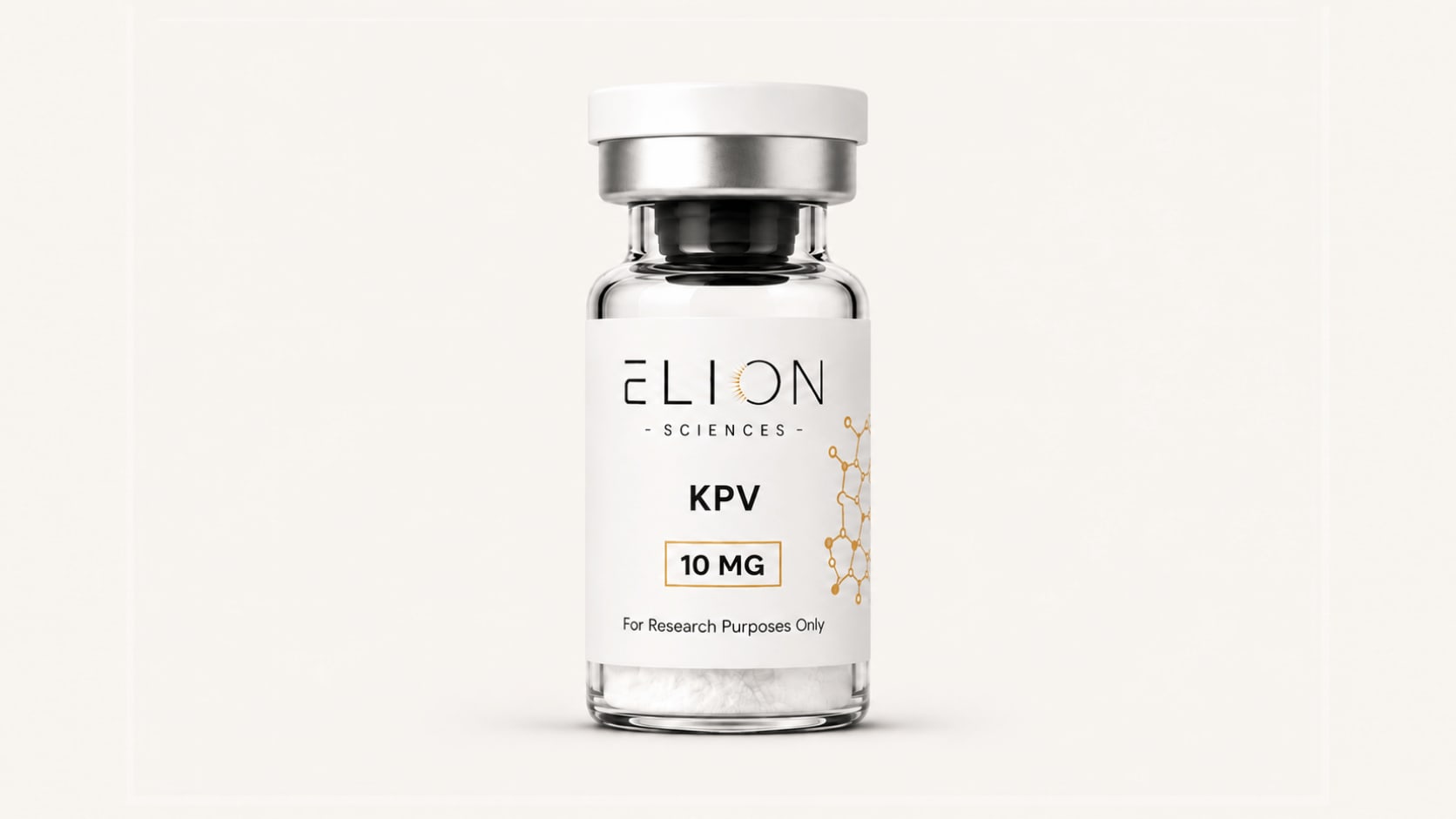
A naturally occurring tripeptide known for its powerful properties in the literature. Research predominantly explores its ability to modulate immune responses and reduce inflammation, particularly in gastrointestinal and dermal models.
Buy One, Get One FREE! The lowest-priced item in each pair is on us. Get up to 5 FREE items per order! Offer valid until November 30, 2026
C16H30N4O4 · 342.43 g/mol · PepT1 peptide transporter, NF-κB / MAP kinase inhibition (downstream) · Not FDA-approved
Batch 2604578
Customers often pair this with:


Formula C16H30N4O4 · 342.43 g/mol · Not FDA-Approved — Research Use Only
KPV is the C-terminal tripeptide fragment of alpha-melanocyte-stimulating hormone (residues 11-13). It is taken up into immune and intestinal epithelial cells via the PepT1 transporter, where nanomolar concentrations suppress NF-kB and MAP kinase-driven pro-inflammatory cytokine production — a mechanism shown to be independent of melanocortin receptors despite KPV's alpha-MSH lineage. It has been studied primarily in mouse models of inflammatory bowel disease; no published human clinical trial data was identified.
Molecular Therapy · 2017
Hyaluronic-acid-functionalized nanoparticles delivered KPV to colonic tissue in a mouse ulcerative colitis model, outperforming free KPV in accelerating mucosal healing.
View Source →Gastroenterology · 2008
Demonstrated PepT1-dependent, melanocortin-receptor-independent uptake of KPV; nanomolar KPV inhibited NF-kB/MAPK activation and oral KPV reduced colitis incidence in mice.
View Source →Inflammatory Bowel Diseases · 2008
In mouse IBD models, KPV treatment produced earlier recovery, stronger regain of body weight, and reduced inflammatory infiltrates versus controls.
View Source →