

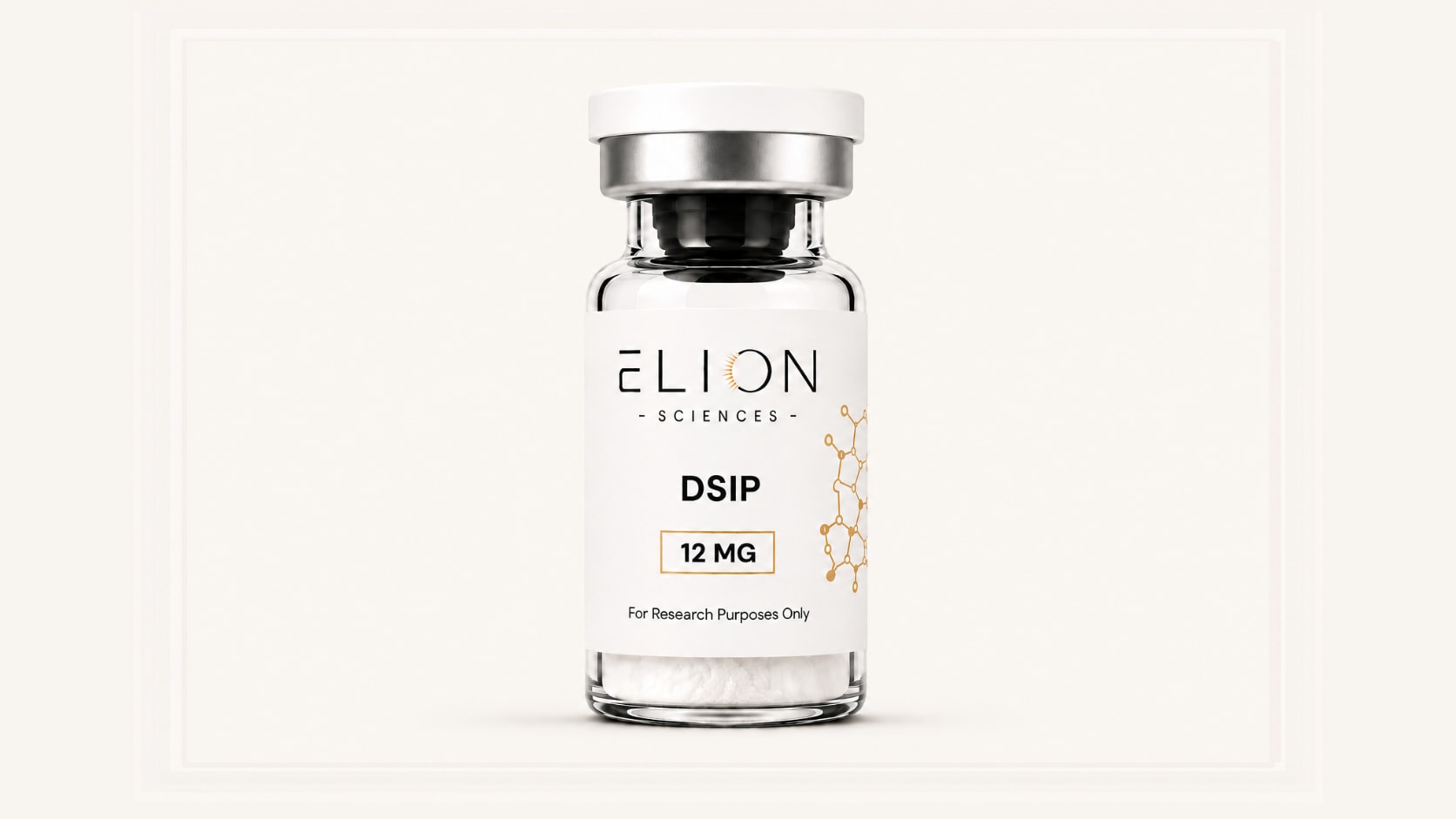
DSIP, or Delta Sleep-Inducing Peptide, is a naturally occurring nonapeptide studied in research involving sleep-related neural signaling, circadian biology, and neuroendocrine regulation. Its biological mechanisms remain an active area of investigation
Buy One, Get One FREE! The lowest-priced item in each pair is on us. Get up to 5 FREE items per order! Offer valid until November 30, 2026
C35H48N10O15 · 848.8 g/mol · No confirmed receptor identified — proposed hypothalamic and GABAergic modulation · Not FDA-approved
Customers often pair this with:

You might also want to check out these products.

Selective Ghrelin Receptor Agonist

Targeted Synergistic Matrix

Actin-Regulating Repair Peptide
Tri-Agonist Metabolic Regulator

Mitochondrial-Derived Peptide

Synthetic GHRH Analog
Anti-Inflammatory Tripeptide

Copper-Binding Tripeptide

Systemic Dermal Peptide Matrix

Accelerated Tissue Repair Protocol
Systemic Tissue Repair Peptide

NNMT Enzyme Inhibitor
Formula C35H48N10O15 · 848.8 g/mol · Not FDA-Approved — Research Use Only
DSIP is a nonapeptide originally isolated from rabbit brain and studied for its association with delta (slow-wave) sleep EEG activity across several species. Despite decades of research, no dedicated DSIP receptor or definitive downstream signaling cascade has been characterized, and its relationship to endogenous sleep regulation remains genuinely unresolved in the primary literature — this uncertainty is itself a notable and honestly-reported finding, not a gap in this summary.
Journal of Neurochemistry · 2006
Concludes that decades after its isolation, no DSIP receptor or clear mechanistic link to sleep regulation has been established, and structural analogues rather than DSIP itself produced slow-wave-sleep effects in animal models.
View Source →International Journal of Clinical Pharmacology Research · 1987
Double-blind, placebo-controlled crossover study of IV DSIP in chronic insomniacs found reductions in nocturnal awakenings and NREM sleep latency, but concluded the improvements lacked clear clinical significance versus placebo.
View Source →