Black Friday: buy any item. Get another on us. Get up to 5 FREE items per order!Start shopping
Elion Sciences
Shop FormulasSolutionsScienceMembership
Start Your Research
  1. Home
  2. /Research
  3. /Experts
  4. /Dr. Christopher H. S. McIntosh, PhD

Professor Emeritus, Department of Cellular & Physiological Sciences, UBC

Dr. Christopher H. S. McIntosh, PhD

Christopher McIntosh is a Vancouver physiologist known for research on GIP, GLP-1, insulin secretion and incretin breakdown, including work informing DPP-4-targeted diabetes therapies.

Based inVancouver, BCResearchers in Vancouver

  • Website
Dr. Christopher H. S. McIntosh, PhD, Professor Emeritus, Department of Cellular & Physiological Sciences, UBC

About Dr. Christopher H. S. McIntosh, PhD

Christopher H. S. McIntosh is a professor emeritus in the Department of Cellular and Physiological Sciences at the University of British Columbia. His university profile records a BSc in 1970 and PhD in 1973 in London, followed by a research appointment at Göttingen University and a move to UBC in 1978.

His research examines gastrointestinal hormones that regulate insulin secretion and fat metabolism, particularly GIP and GLP-1. His work has addressed GIP receptor structure and signalling, changes in incretin responsiveness in diabetes, and the development of longer-acting hormone analogues and strategies that inhibit peptide degradation.

With colleagues including Raymond Pederson and Timothy Kieffer, McIntosh contributed to studies establishing DPP-4-mediated inactivation of incretin hormones. His publications also discuss shortened GIP variants, beta-cell survival and the history of Canadian incretin research, linking mechanistic findings with approaches to diabetes treatment.

Credentials

  • Professor Emeritus, Cellular & Physiological SciencesUniversity of British Columbiacps.med.ubc.ca
  • Associate Professor, 1983–1988University of British Columbiacps.med.ubc.ca
  • Assistant Professor, 1979–1983University of British Columbiacps.med.ubc.ca
  • Research Associate, 1978–1979University of British Columbiacps.med.ubc.ca
  • Academic Research Assistant, 1973–1978Göttingen Universitycps.med.ubc.ca
  • PhD, 1973 (London; awarding institution not specified in retrieved biography)cps.med.ubc.ca
  • BSc, 1970 (London; awarding institution not specified in retrieved biography)cps.med.ubc.ca

Appearances and interviews

  • Research paper

    Discovery of gastric inhibitory polypeptide and its subsequent fate: Personal reflections

    Journal of Diabetes Investigation · March 14, 2016

    Co-authored with Raymond Pederson. Reviews GIP discovery, somatostatin-related work, incretin degradation, DPP-4 inhibitors and shortened GIP variants.

    • Research paper
  • Research paper

    Degradation of glucose-dependent insulinotropic polypeptide and truncated glucagon-like peptide 1 in vitro and in vivo by dipeptidyl peptidase IV

    Endocrinology

    Co-authored experimental study of DPP-IV-mediated GIP and GLP-1 degradation. Published in August 1995; no exact day was established.

    • Research paper

Research areas

Weight Loss & Metabolic Function Research

Weight Loss & Metabolic Function Research

The incretin, amylin, and mitochondrial-metabolism research behind our weight loss research line.

Explore

Compounds in these research areas

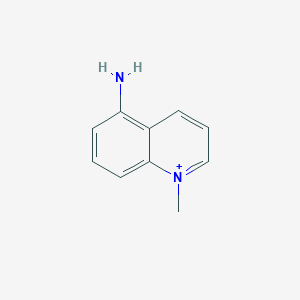
5-Amino-1MQ 2D chemical structure

5-Amino-1MQ

5-Amino-1MQ is a selective, membrane-permeable inhibitor of nicotinamide N-methyltransferase (NNMT), an enzyme that consumes SAM to methylate nicotinamide, depleting cellular SAM and NAD+ pools. Inhibiting NNMT raises intracellular SAM and NAD+ in adipocytes, suppressing lipogenesis and promoting fat oxidation in mouse models — reducing adiposity without reducing food intake. No human safety or efficacy data exist; the founding mouse study observed no adverse effects during short-term dosing, but that is a single short preclinical study, not a toxicology program.

Explore 5-Amino-1MQ
Cagrilintide 2D chemical structure

Cagrilintide

Cagrilintide is a long-acting synthetic amylin analogue that agonizes amylin (AMY1R/AMY3R) and calcitonin receptors, slowing gastric emptying and increasing satiety via hindbrain signaling. It is studied both alone and, more prominently, in combination with semaglutide, where it synergizes via complementary appetite pathways. In the Phase 3 REDEFINE 1 trial, the combination produced 20.4% mean weight reduction at 68 weeks versus 3.0% for placebo; gastrointestinal adverse events (nausea, vomiting, constipation) were the dominant safety finding, occurring in roughly 80% of combination-treated participants versus 40% on placebo, mostly mild-to-moderate.

Explore Cagrilintide
Retatrutide 2D chemical structure

Retatrutide

Retatrutide is a synthetic peptide engineered as a single-molecule agonist at three receptors: GLP-1R, GIPR, and the glucagon receptor (GCGR). Combined GLP-1/GIP agonism enhances glucose-dependent insulin secretion and satiety; the added glucagon receptor agonism is believed to increase energy expenditure and hepatic fat oxidation, proposed to explain the larger fat-mass reductions seen versus GLP-1-only or GLP-1/GIP dual-agonist therapies. In its Phase 2 obesity trial, the 12 mg dose produced up to 24.2% weight loss at 48 weeks versus placebo; gastrointestinal adverse events were the most common finding across trials, and a body-composition substudy found dose-dependent fat-mass reductions with relatively preserved lean mass.

Explore Retatrutide
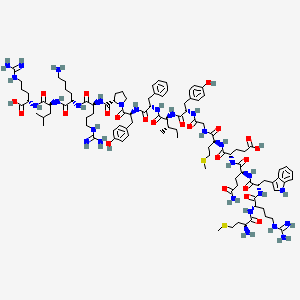
MOTS-c 2D chemical structure

MOTS-c

MOTS-c is a 16-amino-acid peptide encoded within the mitochondrial 12S rRNA gene — a "mitochondrial-derived peptide." It signals to skeletal muscle, suppressing folate-linked purine synthesis and activating AMPK; exercise induces endogenous MOTS-c, and exogenous dosing in mice mimics exercise-associated metabolic benefits including improved insulin sensitivity. No established human safety or dosing data exist for exogenous administration — human evidence to date is limited to measuring endogenous expression during exercise, not administering the peptide itself.

Explore MOTS-c
Tirzepatide 2D chemical structure

Tirzepatide

Tirzepatide simultaneously activates GIP and GLP-1 receptors on pancreatic beta cells and in the brain, enhancing glucose-dependent insulin secretion, suppressing glucagon, slowing gastric emptying, and reducing food intake. Structural studies show it activates GIPR similarly to native GIP but engages GLP-1R differently, producing less receptor desensitization than native GLP-1. It carries the same boxed warning for thyroid C-cell tumors as other drugs in its class. In the pivotal SURMOUNT-1 trial, mean weight reductions reached 22.5% at the highest dose versus 2.4% for placebo at 72 weeks; gastrointestinal adverse events, especially nausea, were significantly more common than with comparators across a 6-trial meta-analysis.

Explore Tirzepatide
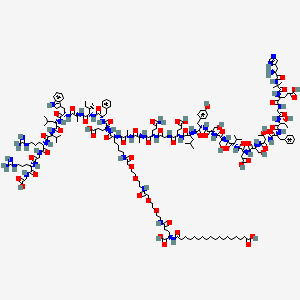
Semaglutide 2D chemical structure

Semaglutide

Semaglutide mimics endogenous GLP-1; an Aib8 substitution blocks DPP-4 degradation, and an albumin-binding fatty-diacid conjugate extends its half-life from roughly 2 minutes (native GLP-1) to about a week, enabling weekly dosing. It stimulates glucose-dependent insulin secretion, suppresses glucagon, slows gastric emptying, and reduces appetite via hypothalamic action. It carries a boxed warning for thyroid C-cell tumors based on rodent carcinogenicity data (human relevance undetermined) and is contraindicated with a personal or family history of medullary thyroid carcinoma or MEN 2. In the pivotal STEP 1 trial, it produced 14.9% mean weight reduction versus 2.4% for placebo at 68 weeks; the SELECT cardiovascular outcomes trial found a reduced composite rate of cardiovascular death, heart attack, or stroke in adults with obesity and existing cardiovascular disease.

Explore Semaglutide

More experts

View all experts
Dr. Peter Attia, MD, Physician, longevity educator, and podcast host.

Dr. Peter Attia, MD

Physician, longevity educator, and podcast host.

Peter Attia founded Early Medical and hosts The Peter Attia Drive. His peptide coverage examines clinical evidence, metabolic drugs, safety, and gray-market claims.

View Dr. Peter Attia, MD
Dr. Abud Bakri, MD, Internal medicine physician and medical educator

Dr. Abud Bakri, MD

Internal medicine physician and medical educator

Abud Bakri is a physician and medical director at The Systems. His public peptide education addresses mechanisms, sourcing, safety, metabolic drugs, and evidence interpretation.

View Dr. Abud Bakri, MD

Dr. Patricia L. Brubaker, PhD, Professor Emerita, Departments of Physiology and Medicine, University of Toronto

Dr. Patricia L. Brubaker, PhD

Professor Emerita, Departments of Physiology and Medicine, University of Toronto

Patricia Brubaker is a Toronto physiologist known for research on GLP-1 and GLP-2, intestinal growth and gut hormone secretion. She also comments publicly on experimental peptides.

View Dr. Patricia L. Brubaker, PhD

Dr. Daniel J. Drucker, MD, University Professor, University of Toronto; Senior Investigator, Sinai Health

Dr. Daniel J. Drucker, MD

University Professor, University of Toronto; Senior Investigator, Sinai Health

Daniel Drucker is a Toronto endocrinologist whose research on GLP-1 and GLP-2 helped enable treatments for diabetes, obesity and intestinal failure.

View Dr. Daniel J. Drucker, MD

The views expressed by the experts featured here are entirely their own and do not constitute medical advice.

Last updated November 22, 2026

Black Friday: buy any item. Get another on us. Get up to 5 FREE items per order!Start shopping

Buy One, Get One FREE! The lowest-priced item in each pair is on us. Get up to 5 FREE items per order! Offer valid until November 30, 2026

Offer terms

  • Buy One, Get One FREE! The lowest-priced item in each pair is on us.
  • Get up to 5 FREE items per order!
  • Reconstitution supplies are not included.
  • This offer can't be combined with other promotions.
  • Offer valid until November 30, 2026
Elion Sciences
Connect
Need Assistance?

Our team is available Monday to Friday, from 9am – 5pm ET excluding Canadian statutory holidays.

Email us at: hello@elionsciences.com

Refer a ResearcherGift 3,000 points to a new researcher. After their first order, you'll receive 5,000 points as our thank you.
Shop All FormulasWhy Elion SciencesThe Science of PeptidesPeptide Quality Reports (CoAs)Leave Us a Review
Refund PolicyAccessibilityRewards Terms Research Use Disclaimer

Quality scores reflect both internal and external independent lab evaluations conducted on each production batch. Individual batch results are available in each product's Quality Report.

Every batch is traceable from synthesis to vial: we record origin, synthesis date, and purity content at intake, then screen each lot for solvent residue, heavy metals, and microbial safety before it's cleared to ship.

99% Purity - Trusted by leading Canadian researchers

Products sold on this website are for laboratory research use only.

Research Solutions
  • Recovery & Tissue Repair Research
  • Weight Loss & Metabolic Function Research
  • Longevity & Cellular Defense Research
  • Growth & Physical Performance Research
  • Aesthetics & Skin Remodeling Research
  • Focus & Cognitive Health Research
  • Explore Research →
Featured Research Hubs
  • Calgary
  • Edmonton
  • Halifax
  • Hamilton
  • Kingston
  • London
  • Montreal
  • Ottawa
  • Quebec City
  • Saskatoon
  • Toronto
  • Vancouver
  • Waterloo
  • Winnipeg
  • Explore The Canadain Research Landscape →
Terms of ServicePrivacy PolicyShipping Policy
© 2026 Elion Sciences. All Rights Reserved.Shipped from Mississauga, Ontario, Canada