University Professor, University of Toronto; Senior Investigator, Sinai Health
Daniel Drucker is a Toronto endocrinologist whose research on GLP-1 and GLP-2 helped enable treatments for diabetes, obesity and intestinal failure.
Based inToronto, ONResearchers in Toronto

Daniel J. Drucker is a University Professor at the University of Toronto and a Senior Investigator at Sinai Health’s Lunenfeld-Tanenbaum Research Institute. He earned his MD at Toronto in 1980 and completed internal medicine and molecular endocrinology training in Toronto and the United States before joining the University of Toronto faculty in 1987.
His research investigates the biology, molecular mechanisms and therapeutic applications of gut peptide hormones, especially GLP-1 and GLP-2. His discoveries helped establish GLP-1’s effects on insulin secretion, food intake and inflammation, and GLP-2’s role in intestinal growth and function. These contributions helped inform the development of peptide-based therapies and DPP-4 inhibitors.
Drucker received the 2021 Canada Gairdner International Award and shared the 2025 Breakthrough Prize in Life Sciences. Alongside his research, he discusses incretin medicines in public interviews, including the benefits and limitations of semaglutide, tirzepatide and newer multi-receptor agonists, and the unanswered questions surrounding their wider applications.
Ground Truths with Eric Topol ·
Discusses the development of GLP-1 medicines, dose effects, brain signalling, inflammation, muscle-related questions and dual- and triple-receptor agonists.
“So I think we need a lot of research, we may actually never know in humans how to reconcile these observations.”
Proceedings of the National Academy of Sciences ·
Co-authored mouse study identifying GLP-2 as a stimulator of small-intestinal epithelial proliferation, bowel growth and villus growth.
Nature Biotechnology
Reports DPP-IV-mediated GLP-2 inactivation and improved experimental activity of a cleavage-resistant GLP-2 analogue.

The angiogenesis and tissue-repair signaling behind our recovery research line.
Explore
The incretin, amylin, and mitochondrial-metabolism research behind our weight loss research line.
Explore
The cellular defense and antioxidant chemistry behind our longevity research line.
Explore
Tirzepatide simultaneously activates GIP and GLP-1 receptors on pancreatic beta cells and in the brain, enhancing glucose-dependent insulin secretion, suppressing glucagon, slowing gastric emptying, and reducing food intake. Structural studies show it activates GIPR similarly to native GIP but engages GLP-1R differently, producing less receptor desensitization than native GLP-1. It carries the same boxed warning for thyroid C-cell tumors as other drugs in its class. In the pivotal SURMOUNT-1 trial, mean weight reductions reached 22.5% at the highest dose versus 2.4% for placebo at 72 weeks; gastrointestinal adverse events, especially nausea, were significantly more common than with comparators across a 6-trial meta-analysis.
Explore Tirzepatide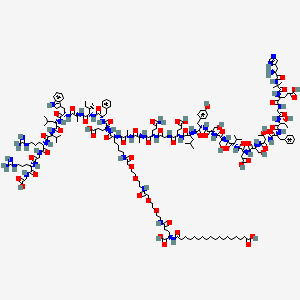
Semaglutide mimics endogenous GLP-1; an Aib8 substitution blocks DPP-4 degradation, and an albumin-binding fatty-diacid conjugate extends its half-life from roughly 2 minutes (native GLP-1) to about a week, enabling weekly dosing. It stimulates glucose-dependent insulin secretion, suppresses glucagon, slows gastric emptying, and reduces appetite via hypothalamic action. It carries a boxed warning for thyroid C-cell tumors based on rodent carcinogenicity data (human relevance undetermined) and is contraindicated with a personal or family history of medullary thyroid carcinoma or MEN 2. In the pivotal STEP 1 trial, it produced 14.9% mean weight reduction versus 2.4% for placebo at 68 weeks; the SELECT cardiovascular outcomes trial found a reduced composite rate of cardiovascular death, heart attack, or stroke in adults with obesity and existing cardiovascular disease.
Explore Semaglutide
Retatrutide is a synthetic peptide engineered as a single-molecule agonist at three receptors: GLP-1R, GIPR, and the glucagon receptor (GCGR). Combined GLP-1/GIP agonism enhances glucose-dependent insulin secretion and satiety; the added glucagon receptor agonism is believed to increase energy expenditure and hepatic fat oxidation, proposed to explain the larger fat-mass reductions seen versus GLP-1-only or GLP-1/GIP dual-agonist therapies. In its Phase 2 obesity trial, the 12 mg dose produced up to 24.2% weight loss at 48 weeks versus placebo; gastrointestinal adverse events were the most common finding across trials, and a body-composition substudy found dose-dependent fat-mass reductions with relatively preserved lean mass.
Explore Retatrutide
Physician, longevity educator, and podcast host.
Peter Attia founded Early Medical and hosts The Peter Attia Drive. His peptide coverage examines clinical evidence, metabolic drugs, safety, and gray-market claims.
View Dr. Peter Attia, MD
Internal medicine physician and medical educator
Abud Bakri is a physician and medical director at The Systems. His public peptide education addresses mechanisms, sourcing, safety, metabolic drugs, and evidence interpretation.
View Dr. Abud Bakri, MD
Physician and Founder, Manus Solis
Handsun Xiao is a Toronto physician at Manus Solis. He writes about peptide therapy, metabolic health, hormone care and the evidence behind longevity interventions.
View Dr. Handsun Xiao, MD, CCFP
Orthopedic surgeon and cellular-medicine educator
William Seeds is an orthopedic surgeon, founder of SSRP Institute, author of Peptide Protocols, and an educator on peptides, cellular medicine, and performance.
View Dr. William A. Seeds, MDThe views expressed by the experts featured here are entirely their own and do not constitute medical advice.
Last updated
Buy One, Get One FREE! The lowest-priced item in each pair is on us. Get up to 5 FREE items per order! Offer valid until November 30, 2026