Endocrinologist, author, and peptide educator
Edwin Lee founded the Institute for Hormonal Balance and co-founded the Clinical Peptide Society. He writes, teaches, and publishes on hormones and peptide-related clinical topics.

Edwin N. Lee, MD, FACE, is an endocrinologist, author, and founder of the Institute for Hormonal Balance in Orlando, Florida. He established the practice in 2008 with a focus on disease prevention and hormonal health, integrating conventional and complementary approaches to patient care. His academic background includes an appointment as assistant professor of internal medicine at the University of Central Florida College of Medicine.
Lee is the author of The Fountain of Youth with Peptides and Feel Good Look Younger: Reversing Tiredness Through Hormonal Balance. His clinical and educational work connects endocrinology with peptide therapeutics, recovery, and healthy aging, bringing hormonal regulation into a broader discussion of long-term health.
His published research includes Intra-Articular Injection of BPC 157 for Multiple Types of Knee Pain, co-authored with Blake Padgett and published in Alternative Therapies in Health and Medicine in 2021. The retrospective chart review examined patients treated at his practice during 2019–2020 with BPC-157 alone or in combination with thymosin beta-4. The small, uncontrolled study documented patient-reported outcomes, providing preliminary clinical observations rather than definitive evidence of safety or efficacy.
Through books, professional peptide education, and media interviews, Lee addresses both clinical and consumer audiences. His appearance on Mark Hyman’s The Doctor’s Farmacy explored BPC-157, epithalon, and the potential applications and limitations of peptide-based approaches to healing and longevity. His work spans clinical practice, public education, and exploratory human research at the intersection of hormonal health and peptide medicine.
The Dr. Hyman Show ·
BPC-157, epithalon, and peptide research.
Alternative Therapies in Health and Medicine ·
Retrospective chart review of intra-articular treatment at Lee’s practice.
Book (Author publication)
Consumer-oriented peptide education.
Book (Author publication)
Hormonal health and a wider wellness framework.

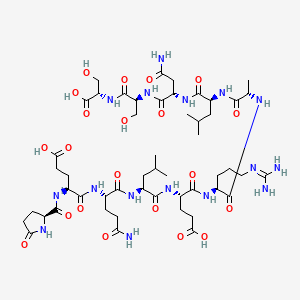
The angiogenesis and tissue-repair signaling behind our recovery research line.
Explore
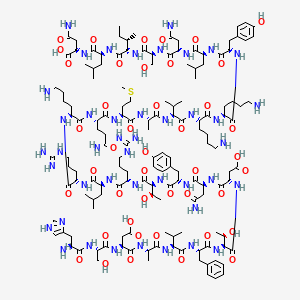
The incretin, amylin, and mitochondrial-metabolism research behind our weight loss research line.
Explore
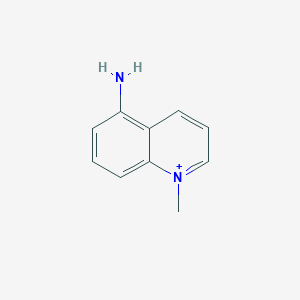
The cellular defense and antioxidant chemistry behind our longevity research line.
Explore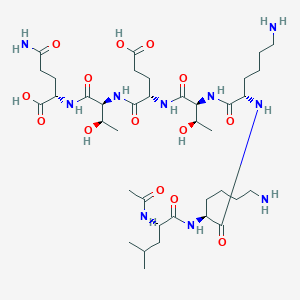
The marketed "TB-500" is a 7-residue fragment of the 43-amino-acid protein Thymosin Beta-4, but nearly all of the mechanistic and efficacy literature — angiogenesis, wound healing, and myoblast chemotaxis — was conducted with the full-length protein, not the fragment; only one identified study characterizes the fragment itself, and it is an analytical detection method paper, not an efficacy or safety study. Full-length Thymosin Beta-4 is an intracellular actin-monomer-binding protein that promotes cell migration and angiogenesis, partly via VEGF induction. This same pro-angiogenic mechanism has a documented dark side: full-length Tβ4-overexpressing tumor cells produced significantly larger tumors and more metastases in an animal cancer model, a legitimate mechanistic safety consideration given TB-500 is marketed on the identical mechanism.
Explore TB-500 (Thymosin Beta-4 Fragment)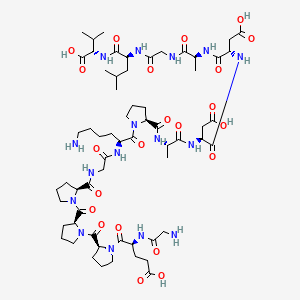
BPC-157 is a synthetic partial sequence derived from a peptide identified in human gastric juice. Preclinically, it accelerates healing of tendon, ligament, muscle, and gut tissue by promoting fibroblast and tenocyte migration, cell survival under oxidative stress, and new blood vessel formation. A 2025 systematic review screened 544 articles and found only 36 met inclusion criteria — 35 preclinical (animal) studies and exactly one small retrospective clinical case series. Published clinical safety data for BPC-157 remains absent; the evidence base is overwhelmingly animal and in-vitro.
Explore BPC-157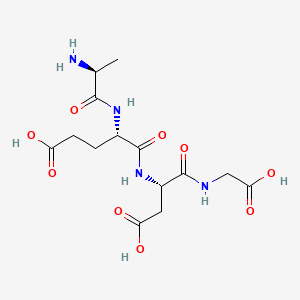
Epitalon (the AEDG tetrapeptide) has been studied for inducing telomerase catalytic-subunit expression and telomere elongation in telomerase-negative human fibroblast cultures, and for normalizing circadian melatonin and cortisol secretion in aged primates. Molecular modeling suggests it may bind histone H1 sites to epigenetically regulate transcription. Its telomerase-inducing effect raises a theoretical oncogenesis concern — telomerase reactivation is a hallmark of many cancers — though the origin research group's own animal work reports decreased experimental carcinogenesis with treatment, a tension not yet independently resolved outside that group. No completed human clinical safety trials were identified; the evidence base is limited to in vitro and animal studies from a small number of research groups.
Explore Epitalon (Epithalon)
Internal medicine physician and medical educator
Abud Bakri is a physician and medical director at The Systems. His public peptide education addresses mechanisms, sourcing, safety, metabolic drugs, and evidence interpretation.
View Dr. Abud Bakri, MD
Functional-medicine physician and media host
Mark Hyman is a family physician, author, and podcast host. His roles include The UltraWellness Center, Function Health, and the Cleveland Clinic Center for Functional Medicine.
View Dr. Mark Hyman, MD, FMCP-M
Orthopedic Surgeon and Founder, Human 2.0
Chris Raynor is an Ottawa orthopedic surgeon and founder of Human 2.0. He discusses peptide evidence, injury recovery and product-quality risks through videos and The Ortho-POD.
View Dr. Chris Raynor, MD, FRCSC
Orthopedic surgeon and cellular-medicine educator
William Seeds is an orthopedic surgeon, founder of SSRP Institute, author of Peptide Protocols, and an educator on peptides, cellular medicine, and performance.
View Dr. William A. Seeds, MDThe views expressed by the experts featured here are entirely their own and do not constitute medical advice.
Last updated
Buy One, Get One FREE! The lowest-priced item in each pair is on us. Get up to 5 FREE items per order! Offer valid until November 30, 2026